Saturday, May 24, 2008

"late nights on air" by elizabeth hay

regrettably i had to speed through this book as it was due back at the library with 200+ holds on it.

this book is beautiful. very meaty, but absolutely outstanding and deserving of its many accolades. i had to carefully read it, often pausing after particular sentences to let the words sink in; be absorbed. after my last rather vacuous read, this was a welcome change. elizabeth hay's prose is majestic and complex. she gets inside each of her characters and offers profound insights into their lives and personalities. my strong interest in heading to the northern part of canada was reawakened and satisfied.
set in yellowknife in the 1970's, the story follows the people who work for the local radio station. fabulous.

Wednesday, May 21, 2008

"quiet please: dispatches from a public librarian" by scott douglas

what i liked most about this book was the chapter titles.

it's not that it is bad, it's just not very good. if i didn't work in a library, i would have stopped reading it. considering how much i love douglas' regular mcsweeney's column,
"dispatches from a public librarian", i thought this book would be just as great. not so. the humour is often stupid, the writing is sub-par and his grand philosophical statements about a librarian serving the community come off as shallow and narcisstic. stick with mcsweeney's mr. douglas.

Friday, May 16, 2008

"the loss of leon meed" by josh emmons

up until about page 200, i was sure this would end up in my top 10 books ever.  upon finishing it, i'd put it in my top 25, which is still a very respectable place.  it was (and is!) everything i could have dreamed off. contemporary magical realism, eclectic and beautiful characters, sly humour, heartbreaking and subtle language, an intriguing narrative and innovative structure.

set in a small city in northern california, this novel follows an eclectic cast of characters as they go about living the best lives that they can. tying them all together is leon meed, a 50something burl sculptor, who keeps mysteriously materializing in their lives.

i found the ending not quite up to par with the rest of the story, but it's hard to have a satisfying ending to a story with so many diverse characters and some unexplainable phenomena.  a review i read said "it sets up expectations it cannot fufill", which is pretty spot on.  it's still a stellar book that'll warrant a re-read in a couple of years.  i anxiously await josh emmons next book.


Sunday, May 11, 2008

"the know-it-all: one man's humble quest to become the smartest person in the world" by a.j. jacobs

after tremendously enjoying a.j. jacobs newest book, "the year of living biblically" in which he lives by the bible for an entire year, i had to read this one in which he embarks on reading the entire encyclopedia britannica.  

while not as refined as his latest offering, this book was a very good read.  the humour is often a bit hammy and too obvious, unlike the wit in "the year of living biblically", but it's kind of nice to be able to actually notice a writer getting better.


Monday, May 5, 2008

"the luck of ginger coffey" by brian moore

poor ginger coffey. the guy just can't get a break. he immigrates from ireland to canada with his small family in hopes of a better life and ends up with a shitty job, a tiny apartment and a wife who leaves him for their only friend in montreal. despite his inumberable obstacles and hardships, ginger's optimism rarely wanes and is the impetus for the novel, propelling the title protagonist ever forward.

this book won the governor general's award in 1960. it was a quick read.

Wednesday, April 30, 2008

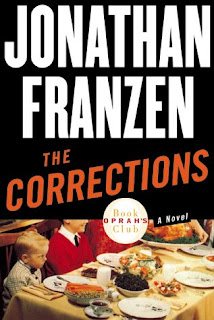
"the corrections" by jonathan franzen

i was ready for this book to end around page 300. it's not that i didn't like it, but this novel went in so many directions, that i often got frustrated and fed-up.

at its core, "the corrections" is about the lambert family. there's the neurotic and over-bearing matriarch, enid, and her quickly deteriorating husband, alfred. there's their eldest child, gary; a privileged, yet clinically depressed suburbanite with a beautiful wife and three of his own boys. the middle child, chip, a former university professor fired for having an affair with a student, and denise, the youngest, a chef with her own restaurant and oodles of her own romantic problems. the characters and dynamic reminded me a lot of douglas coupland, though less extreme.

the book mostly consists of very large chunks about each character that often veer off into other large chunks about secondary characters with enough back story to form their own novels. at one point, enid and alfred take a cruise and there's a 20 page account from a women enid meets. at another point, chip goes to lithuania and there's 30 pages of how the country is falling apart and how such-and-such unpronounceable eastern european name is at war with another unpronounceable eastern european name and it became easy to stop paying attention and gloss over the words.

despite my many frustrations with this novel, franzen should be complimented for his vivid and unique descriptions, often hilarious situations and deeply moving account of a dysfunctional family

Tuesday, April 15, 2008

"the new york trilogy" by paul auster

this book is three short novellas that could be classified as postmodern detective fiction.

the first, city of glass, follows a protagonist writer as he’s mistaken for a detective (named paul auster) and starts an obsessive watch of a recently released criminal. it’s bizarre and absurd and not much happens, but it’s fascinating to read.

the second, ghosts, is the story of blue, who’s hired by white, to watch black. white rents an apartment for blue on orange street where he can see directly in to black's window. black turns out to be quite dull, spending most of his time writing and reading thoreau. it’s bizarre and absurd and not much happens, but it’s fascinating to read.

the third, the locked room, is also the tale of a writer. he’s contacted by his childhood best friend’s wife after the friend disappears. the friend, fanshawe, told his wife, sophie, that if anything should ever happen to him she’s to contact this friend to read over his life’s work and deem if any of it is suitable for publishing. the protagonist writer friend publishes all fanshawe’s work, marries sophie and embarks on writing a biography about fanshawe. it’s bizarre and absurd and there’s much more action and plot than the first two novellas and it's fascinating to read.

there are many similar themes that run through these stories tying them together into a cohesive whole. they’re all meta-fictional with themes of watching/being watched, mistaken identities, existentialism, transformation and intrigue. while i'm not going to rush out to read paul auster's entire oeuvre, i'll definitely keep him in mind for future reading.